
Your reference value on 31 December 2025
The gain is measured from the value of your shares at the reference moment. The better that starting point is substantiated, the less taxable gain arises later from an understated lump-sum estimate.
A reference value fixes the starting point. Substantiate it today so you don’t fall back on a lump-sum that rarely works in your favour.
Why a starting point
Why the reference moment matters
The taxable gain is the difference between the later sale price and the value of your shares at the reference moment. That starting point co-determines what you pay later.
If it is not substantiated, you fall back on a lump-sum approach. It ignores what your business is actually worth and tends to sit lower: which makes your later taxable gain larger.
- Gain = sale price − reference value of the shares
- A lower starting point means a larger taxable gain later
- A substantiated reference value limits dispute with the tax authority
What to do
Lock in your reference value now
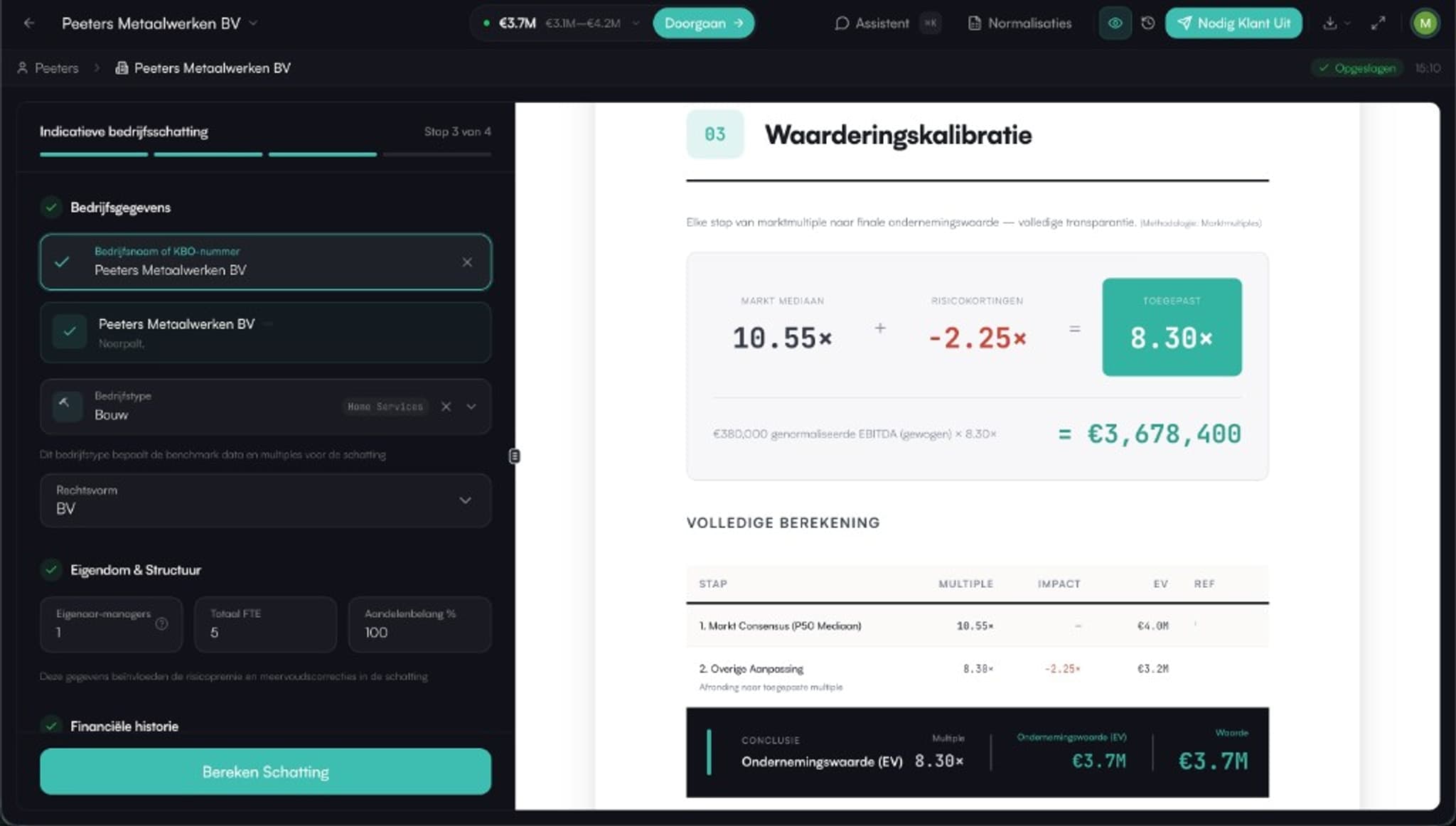
Upswitch computes your valuation from your figures and KBO data, using the same methodology advisors use. You get a defensible report you: or your accountant: can substantiate down to the normalization.
That gives you a reference value that holds up, instead of relying on a lump-sum.
Frequently asked questions
What is the reference value?
The substantiated value of your shares at a point in time. It is the starting point for calculating any later gain.
Why is 31 December 2025 mentioned?
Communication around the capital gains tax refers to the value of your shares before the new rules take effect as the starting point. Confirm how it applies to your situation with your accountant.
What if I have no valuation at that moment?
You typically fall back on a lump-sum approach. Locking in a substantiated valuation now gives you a stronger, often more favourable starting point.
Lock in your reference value
Start with a free scan, or have your accountant help build and attest the file.
This page provides general information about the Belgian capital gains tax and is not tax or legal advice. Dates, thresholds and rates depend on your situation and current rules: confirm them with your accountant or tax adviser.
Related depth and references
Related depth and references
Capital gains tax 2026: overview
Back to the overview: the law, lump-sum vs. professional, and how Upswitch helps.
Substantial shareholding rates
20% threshold, €1M exemption and progressive brackets.
Lump-sum vs. professional valuation
Book equity + 4× EBITDA versus ten methods.
Role of accountant and auditor
Why reviewable data and normalizations matter.
Deadline 31 December 2027
The window to lock in your valuation in time.
Fiscal reference value explained
How the lump-sum method works: and where it falls short.
All 10 valuation methods
DCF, EBITDA / SDE / ARR / revenue multiples, NAV, market approach and more.