
Why 31 December 2027 matters
There is a window to formally lock in your valuation. Wait, and you risk falling back on a lump-sum estimate that rarely works in your favour.
The earlier you fix it, the stronger your position: and the more time to optimise your file.
The window
A formal moment to lock it in
Communication around the capital gains tax refers to a window to formally lock in your valuation. Having a substantiated valuation within that window means starting from a stronger position.
Miss the window and you typically fall back on a lump-sum approach: simple, but rarely favourable. Confirm the exact dates and application with your accountant.
- A substantiated valuation within the window = a stronger starting point
- Missing the window = lump-sum fallback
Why now
Waiting costs you options
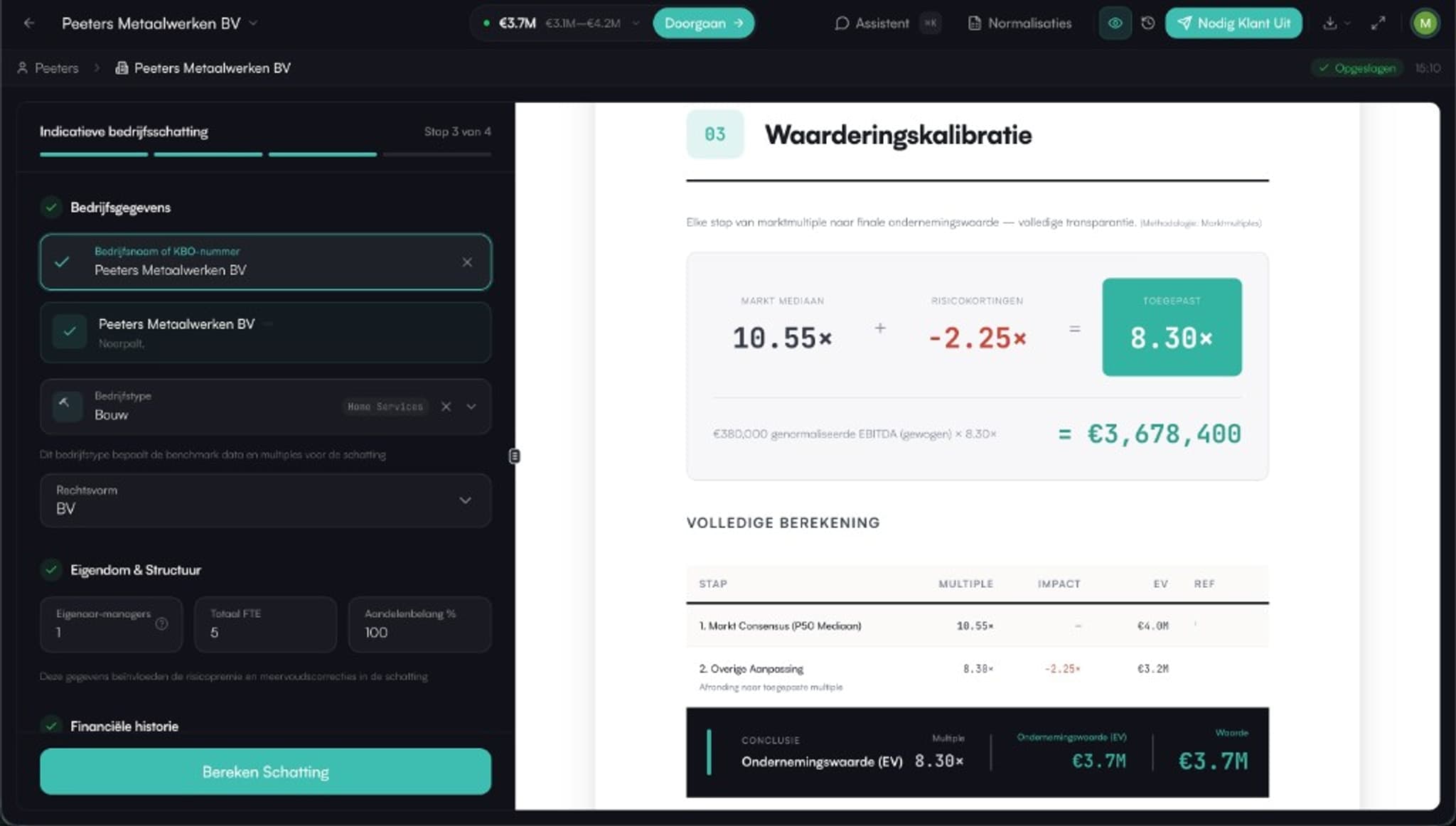
Starting early gives you certainty and the time to normalize your figures, substantiate your file and optimise your value before any transfer.
Upswitch delivers a first defensible valuation in minutes, which you or your accountant can refine further.
Frequently asked questions
What happens after the deadline?
Without a valuation locked in on time, you typically fall back on a lump-sum approach. Confirm the exact consequences for your situation with your accountant.
Do I need to act now?
Fixing it early gives you a stronger starting point and time to optimise your file. You can start for free today.
Can my accountant do this for me?
Yes. You can have your accountant help build and attest the file.
Lock in your valuation in time
Start with a free scan, or have your accountant help build the file.
This page provides general information about the Belgian capital gains tax and is not tax or legal advice. Dates, thresholds and rates depend on your situation and current rules: confirm them with your accountant or tax adviser.
Related depth and references
Related depth and references
Capital gains tax 2026: overview
Back to the overview: the law, lump-sum vs. professional, and how Upswitch helps.
Reference value 31 December 2025
Why the reference moment drives your later gain.
Substantial shareholding rates
20% threshold, €1M exemption and progressive brackets.
Lump-sum vs. professional valuation
Book equity + 4× EBITDA versus ten methods.
Role of accountant and auditor
Why reviewable data and normalizations matter.
All 10 valuation methods
DCF, EBITDA / SDE / ARR / revenue multiples, NAV, market approach and more.
Business value by sector
Per-sector multiples for a first reference of your value.